
Every engagement runs the same four moves.
The presenting problem is always a symptom of something structural underneath.
How the work moves
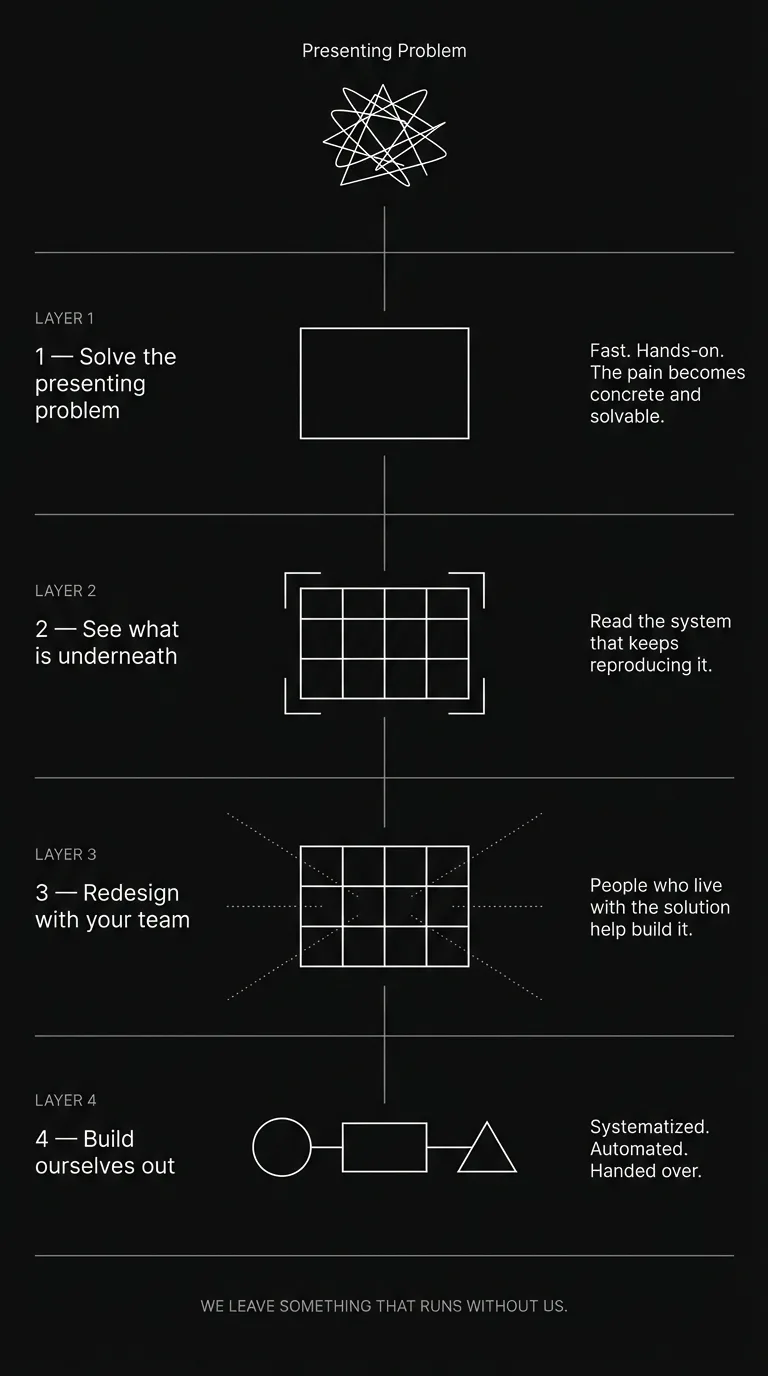
The work usually moves in four steps. Deal with what hurts. Read what keeps recreating it. Redesign with the people who have to live with it. Leave behind a system that can run.
Solve the presenting problem
Find something concrete that hurts right now. Solve it quickly enough that people can feel the difference.
See what is underneath
Once the immediate pain is down, you can usually see what keeps recreating it.
Redesign with your team
We work with the people who have to live with the solution. Their knowledge is part of the redesign.
Build ourselves out
Systematize what worked. Automate what can be automated. Hand it over. The work is done when the system runs and we are not in it.
The six things that go wrong
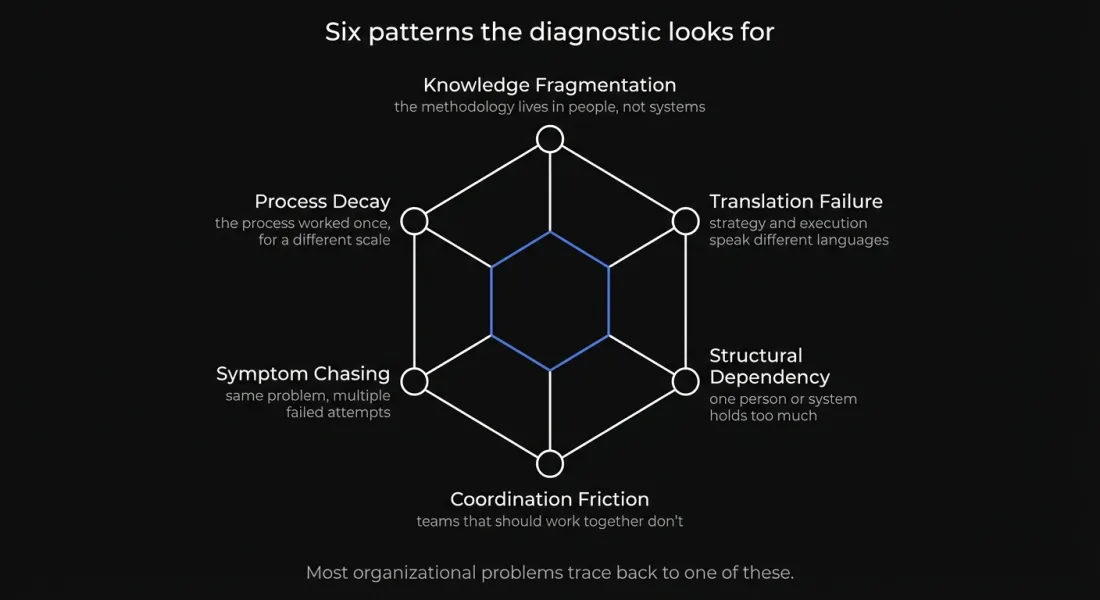
The diagnostic looks for recurring structural failure modes. Usually more than one shows up. Usually one is doing most of the damage.
01
Knowledge Fragmentation
Critical knowledge lives in heads, inboxes, and side channels instead of accessible systems.
02
Translation Failure
Knowledge exists, but it does not turn into behavior, decisions, or outcomes.
03
Structural Dependency
One person or one node has become load-bearing for work the system should be able to carry.
04
Coordination Friction
Work breaks at the handoffs because the coordination design does not match the load.
05
Symptom Chasing
Teams keep fixing visible pain while the upstream cause keeps regenerating it.
06
Process Decay
Processes were built once, then drifted. Workarounds became the real operating system.
Run the diagnostic
If this page sounds familiar, run the diagnostic. It takes about eight minutes and gives you a first structural read.
Run the diagnostic